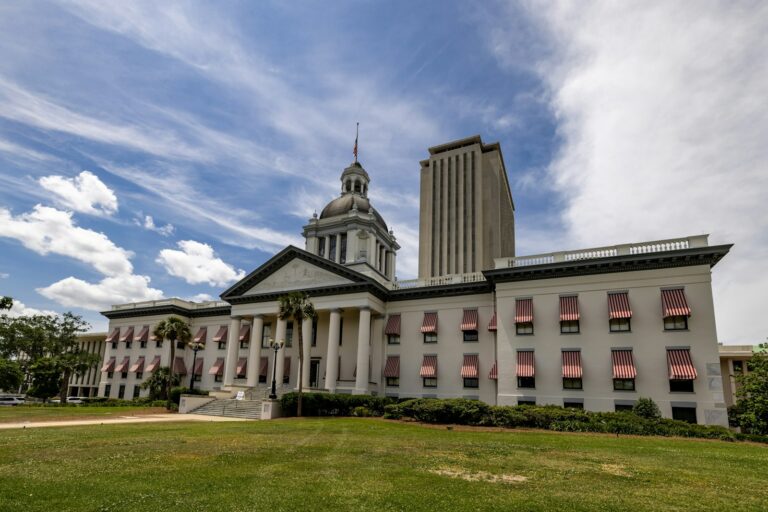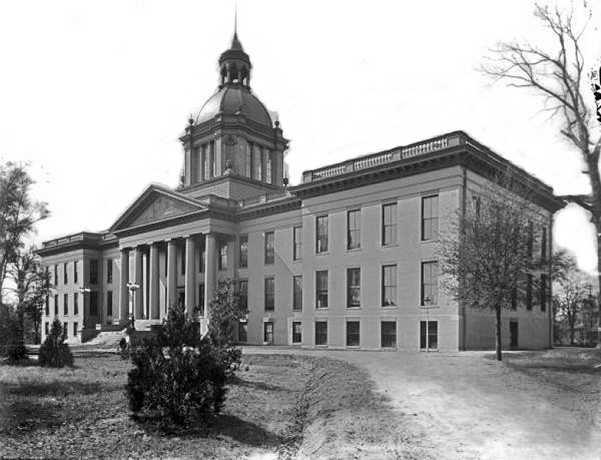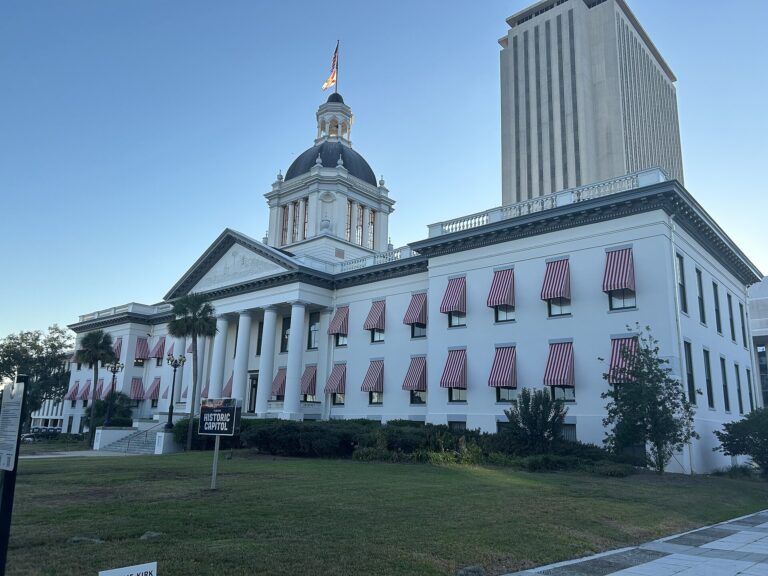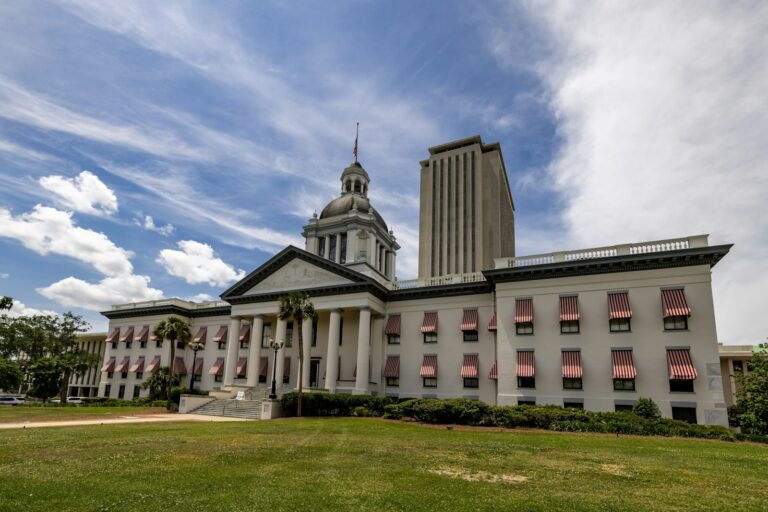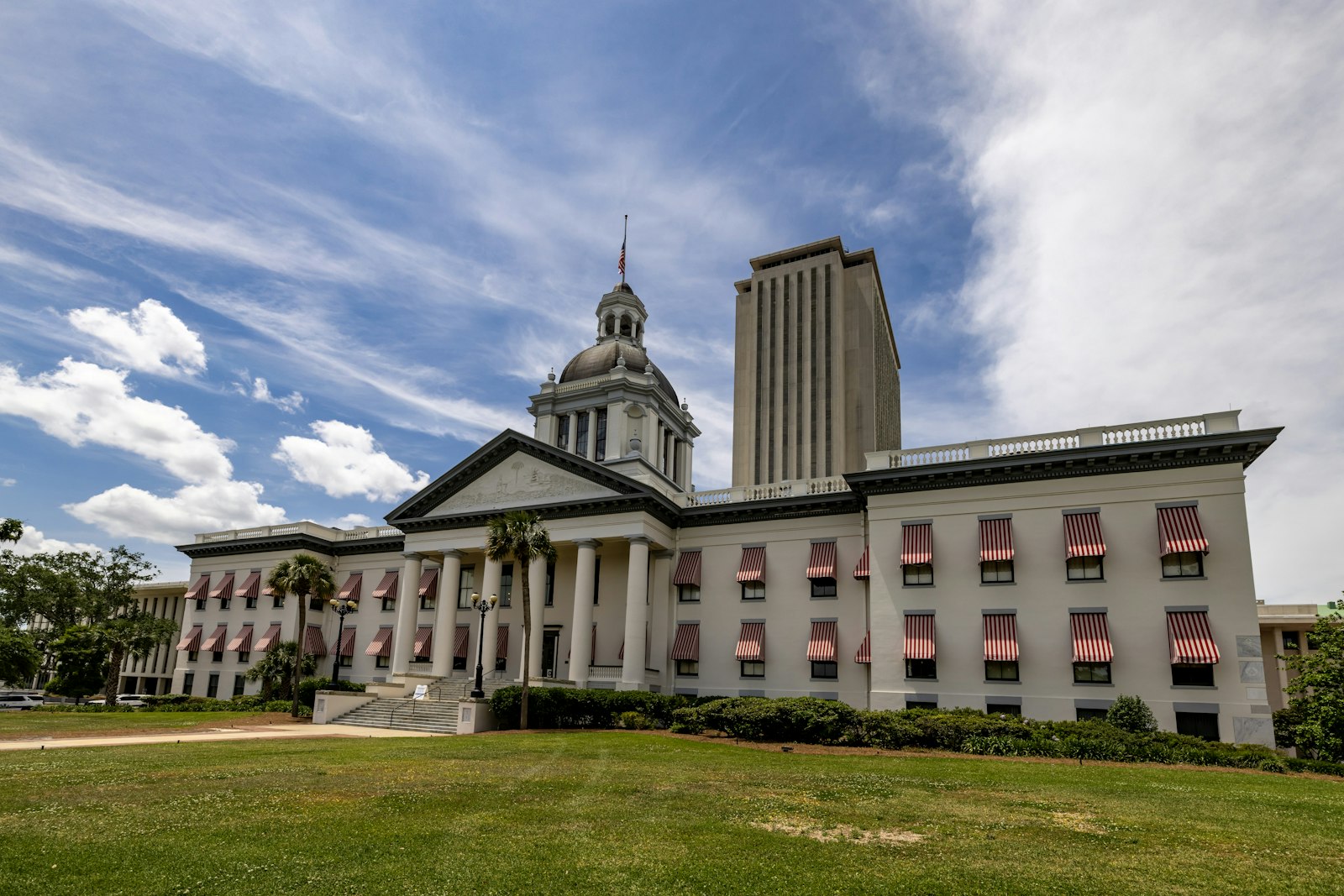
The Historic Capitol in downtown Tallahassee. Source: Mick Haupt via Unsplash. License: Unsplash License.
Quick Answer: The City of Tallahassee adopted its fiscal year 2027 budget in late September 2026, with an operating budget of about $983.5 million and a capital budget of about $282.8 million. A new state supermajority rule forced commissioners to drop the proposed 4.4072-mill property tax rate and adopt 4.2573 mills, slightly below the rollback rate. Water and wastewater customers face modest rate increases, and the city’s electric, gas, water and sewer utilities remain major contributors to the general fund.
The City of Tallahassee entered fiscal year 2027 on Oct. 1, 2026, with a spending plan shaped by a workforce buyout, a new Florida supermajority rule for tax rates above rollback, and a voter-approved property tax amendment that will squeeze revenue starting in fiscal 2028. For businesses in Tallahassee, Leon County and the surrounding rural counties served by city utilities, the budget sets tax rates, utility charges and fire assessments, and funds the capital work local contractors compete for.
How big is the City of Tallahassee’s FY2027 budget?
The city’s fiscal 2027 budget includes an operating budget of approximately $983.5 million and a capital budget of $282.8 million, according to the record of the City Commission’s second and final public hearing in September 2026. Together, the two pieces total about $1.27 billion. At the June 10, 2026, budget workshop, local coverage put the overall figure at about $1.2 billion.
For comparison, the fiscal 2026 budget the commission adopted in September 2025 contained an operating budget of about $942 million and a capital budget of about $267 million, a combined record of roughly $1.21 billion. Operating spending therefore rose roughly 4%.
The final budget passed 3-2, with Commissioners Jeremy Matlow and Jack Porter voting no. The general fund, which pays for police, fire, parks and most day-to-day city services, was about $226 million in fiscal 2026, and the general fund draws about $80 million from property taxes in the new budget, according to coverage of the final hearing.
FY2027 budget snapshot
| Item | FY2027 (adopted) | FY2026 (adopted) |
|---|---|---|
| Fiscal year | Oct. 1, 2026 – Sept. 30, 2027 | Oct. 1, 2025 – Sept. 30, 2026 |
| Operating budget | About $983.5 million | About $942 million |
| Capital budget | $282.8 million | About $267 million |
| Operating millage | 4.2573 mills | 4.4072 mills |
| Rollback rate | 4.2782 mills | Adopted rate was 4.69% above rollback |
| Final budget vote | 3-2 | 3-2 |
| Final millage vote | 5-0 (after 4.4072 mills failed 3-2) | 3-2 |
| Credit rating (Fitch) | AA+, Stable Outlook (affirmed summer 2026) | — |
What property tax rate did Tallahassee adopt for FY2027?
The commission adopted an operating millage rate of 4.2573 mills, or $4.2573 for every $1,000 of taxable value. On a property with $100,000 of taxable value inside city limits, that equals about $425.73 in city property tax, before any county, school or special district levies.
The final rate was not the one staff proposed. City staff had recommended keeping 4.4072 mills, the same rate as fiscal 2026. That rate was 3.47% above the aggregate rollback rate of 4.2782 mills, the rate that would raise roughly the same revenue as the prior year from existing property. Under a new Florida law, exceeding the rollback rate required a two-thirds vote of the governing body, which for a five-member commission means four votes.
The proposed rate passed 4-1 at the Sept. 9 first hearing. At the final hearing, however, the 4.4072-mill motion drew only three votes, from Mayor John Dailey, Mayor Pro Tem Curtis Richardson and Commissioner Dianne Williams-Cox, and failed. Commissioners then approved 4.2573 mills unanimously, a rate slightly below rollback that needed only a simple majority.
Staff had estimated the proposed rate would have raised about $2.8 million more than rollback, intended as a head start on fiscal 2028. Rather than order across-the-board department cuts, the city covered the lower property tax revenue with a reserve transfer tied to its deficiencies fund, which the city had expected to have fully funded for the first time in 10 years. Planned service levels were kept intact.
How did the city balance the FY2027 budget?
What was the voluntary separation program?
The largest structural change was a voluntary separation incentive program that the commission approved 3-2 in spring 2026. City records showed 171 employees accepted the package, which city officials described as about a 5% workforce reduction. The offer was $20,000 or 12 weeks of base pay, whichever was greater, plus a year of continued health coverage and payout of accrued leave. Departing employees included 21 from the Tallahassee Police Department.
Projected savings shifted as positions were refilled. In June, the city projected $8.46 million in fiscal 2027 savings; by Sept. 9, staff put the figure at roughly $8 million to $8.45 million. Coverage of the final hearing reported general fund personnel spending falling from roughly $131.1 million to $125.7 million, and $5.4 million in expected general fund savings from the program.
What else supported the general fund?
Staff acknowledged that hospital sale revenue was part of what allowed them to present a balanced budget; no dollar figure was reported. The June proposal also included a 4% across-the-board employee raise. A federal demand to repay more than $1 million from a HUD lead-abatement grant was not reflected in the budget as of the first hearing.
The city’s credit standing remained strong. In an Aug. 7, 2026, release, the city said Fitch Ratings affirmed its bond programs at AA+ with a Stable Outlook, gave its financial resilience component the top “aaa” score, and projected debt service coverage at about twice the AA+ minimum after planned debt issuances.
How do Tallahassee’s electric, water and gas utilities fit into the budget?
The city’s utility enterprise funds account for much of the operating budget and send money to the general fund each year. In fiscal 2026, those transfers were $39.1 million from electric, $6.3 million from sewer, $4.5 million from water, $3.8 million from gas and $2.5 million from solid waste, and the city’s multiyear plan escalates them by inflation.
| Utility | Scale | FY2026 transfer to general fund | FY2027 rate notes |
|---|---|---|---|
| Electric | About 124,000 customers; 221 sq. mi.; 737 MW net summer capability | $39.1 million | Guided by a four-year rate study |
| Natural gas | 34,000+ customers; 965 miles of mains in Leon, Gadsden and Wakulla | $3.8 million | Transfer indexed to CPI |
| Water | Typical residential bill based on 6,000 gallons | $4.5 million | About $0.25/month increase proposed |
| Wastewater | 26.5 MGD Thomas P. Smith Water Reclamation Facility | $6.3 million | About $2.58/month increase proposed |
| Solid waste | Self-supporting fee-based fund | $2.5 million | Rate adjustments approved Sept. 9 |
What is changing for electric customers?
The city’s April 2026 Ten Year Site Plan, filed with the Florida Public Service Commission, describes a system with about 124,000 customers across 221 square miles. Generation comes from the Arvah B. Hopkins Generating Station (484 MW net summer), the Sam O. Purdom Generating Station in St. Marks (222 MW), 18 MW of reciprocating engines at Substation 12, and 62 MW of solar under power purchase agreements. Net summer capability was 737 MW at the end of 2025, against a 2025 summer peak of about 599 MW.
The plan schedules no new generation or retirements through 2035, though the city anticipates adding battery storage. Planned transmission work includes rebuilding two 115-kilovolt line segments totaling about 6.1 miles, with in-service dates of December 2030. No base electric rate increase was reported as part of the fiscal 2027 budget hearings. The commission also voted to name a new utility substation after retiring City Manager Reese Goad, who announced in April 2026 that he would step down after 26 years with the city.
How much will water and sewer bills rise?
Water and sewer rate adjustments were approved at the September hearings, based on an independent rate study. Staff described the proposed changes as about 25 cents a month for water and $2.58 a month for wastewater for a typical customer. For context, fiscal 2026 increases were 2.4% for both systems, or about $0.61 a month on water and $1.54 a month on sewer. Commercial sewer customers pay a monthly customer charge that scales with meter size, from $26.09 for a 5/8-inch meter to $2,086.72 for an 8-inch meter, plus a usage charge, so high-volume users feel rate changes more than households do.
What fees affect Tallahassee businesses in FY2027?
Beyond property taxes and utility bills, several city charges touch business costs:
- Fire services assessment: In September 2025, the commission adopted a multiyear fire fee schedule to fund firefighter wages and 26 additional firefighters, with further increases scheduled for fiscal 2027 and 2028. In fiscal 2026, the monthly commercial rate rose 12.46% in Zone 1 to $172.79 and 13% in Zone 2 to $159.94. The city has moved to end its fire services interlocal agreement with Leon County after the county declined to approve a larger increase.
- Solid waste and parking: Rate adjustments for both were approved at the Sept. 9, 2026, hearing; specific amounts were not reported. In fiscal 2026, the commercial solid waste rate rose from $31.22 to $33.43 a month.
- Development-related fees: Growth management fees and building inspection fees are indexed to inflation under the city’s financial plan, so contractors and developers should expect annual adjustments.
Which capital projects are in Tallahassee’s budget?
The $282.8 million fiscal 2027 capital budget is the second year of the city’s five-year capital improvement plan. The fiscal 2026–2030 plan totaled about $1.19 billion across 216 projects, with $268.2 million appropriated for 152 projects in fiscal 2026. Projects the city highlighted in that plan include a Public Safety Campus, a new Senior Center and water and sewer infrastructure for the Southside Triangle area.
At the June workshop, commissioners accelerated $750,000 for city electric vehicle charging stations, approved additional funding for a Waverly Road sidewalk project and approved a budget amendment for advance orders of refuse trucks. Fire Station 17 on Lake Bradford Road remains paused, because current fire rates do not fund its construction.
Separately, the city-county Blueprint Intergovernmental Agency reviewed a fiscal 2027 budget in June that included $31.4 million for infrastructure projects and $4.6 million for the Office of Economic Vitality, which runs business development and workforce programs.
How will Amendment 3 affect the city’s future budgets?
Florida voters approved Amendment 3 on Nov. 3, 2026, with 62% of the vote. It raises the homestead exemption for non-school property taxes to $150,000 in 2027 and $250,000 in 2028, and it lowers the annual assessment increase cap for non-homestead property, including commercial and rental property, from 10% to 5%. The city had projected the measure would cost it $11.2 million in fiscal 2028 and $17.8 million in fiscal 2029. For city finances, the effect begins with the fiscal 2028 budget.
What does the FY2027 budget mean for local businesses?
For commercial property owners inside city limits, the adopted millage is lower than in fiscal 2026, though actual bills also depend on assessed values. Utility costs are rising modestly, led by wastewater, and fire assessments continue the step-ups adopted in 2025. On the spending side, a capital budget of nearly $283 million and an AA+ rating support continued public works activity, which matters to local engineering, construction and supply firms. The city also enters the year with a smaller workforce, a city manager transition and revenue pressure ahead in fiscal 2028 and 2029.
Frequently Asked Questions
When does Tallahassee’s FY2027 budget take effect?
The fiscal year began Oct. 1, 2026, and runs through Sept. 30, 2027. The commission adopted the budget at its second public hearing in late September 2026.
What is the City of Tallahassee millage rate for FY2027?
The adopted rate is 4.2573 mills, down from 4.4072 mills in fiscal 2026 and slightly below the 4.2782-mill rollback rate.
Why did the proposed millage rate fail?
A new Florida law requires a two-thirds vote to exceed the rollback rate. The 4.4072-mill proposal received three of the four votes needed, so commissioners adopted a lower rate unanimously.
Are Tallahassee utility rates going up in FY2027?
Water and sewer adjustments were approved, estimated at about $0.25 a month for water and $2.58 a month for wastewater for a typical customer. No base electric rate increase was reported in the budget hearings.
How much do city utilities contribute to the general fund?
Fiscal 2026 transfers totaled about $56.2 million, led by $39.1 million from the electric utility, and the city’s plan indexes them to inflation.
Sources and Further Reading
- FY26 Approved Budget — City of Tallahassee
- City of Tallahassee Bond Programs Affirmed by Fitch Ratings (news release, Aug. 7, 2026) — City of Tallahassee
- City Manager Reese Goad Announces Retirement (news release, April 28, 2026) — City of Tallahassee
- City Commission to Meet on June 10 (news release) — City of Tallahassee
- Wastewater Services rates page — City of Tallahassee Utilities
- Ten Year Site Plan, April 2026 — City of Tallahassee Utilities, filed with the Florida Public Service Commission
- City Commission Meeting, Sept. 23, 2026; City Commission Meeting, Sept. 9, 2026; City Commission Workshop, June 10, 2026 — meeting records via Govly
- Tallahassee tax vote collapses under new supermajority law, forcing lower millage rate — FOX 49
- Tallahassee advances budget and higher-than-rollback tax rate — but questions remain — FOX 49
- Tallahassee City Commission votes on DEI policy, approves 2027 fiscal year budget — WCTV
- City of Tallahassee budget set at $1.2 billion for next fiscal year, heads toward final approval — WTXL
- 170 City of Tallahassee employees taking voluntary separation package, per city records — WTXL
- Tallahassee adopts tentative budget and millage; fire services rate increase passes amid county dispute — Citizen Portal
- All the City of Tallahassee and Leon County taxes and fees you’ll be paying in 2026 — Tallahassee Democrat
- Florida voters pass Amendment 3 property tax measure, reject 2 other amendments — News4JAX
About the Author