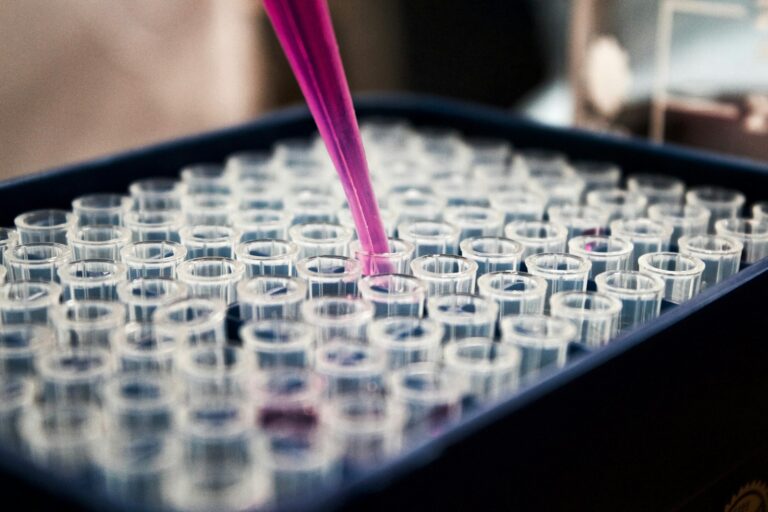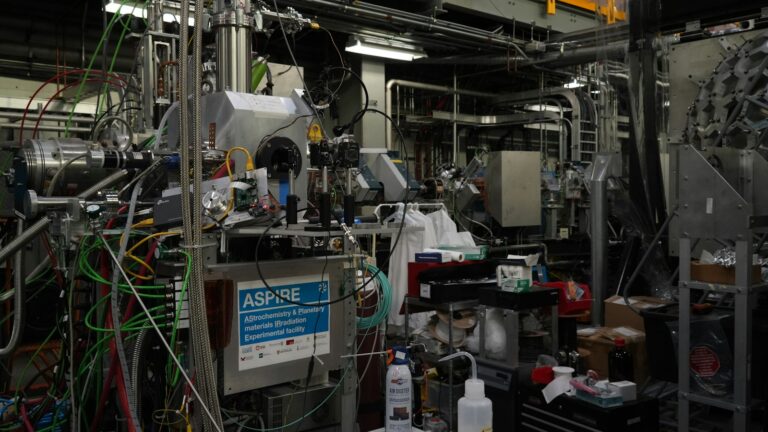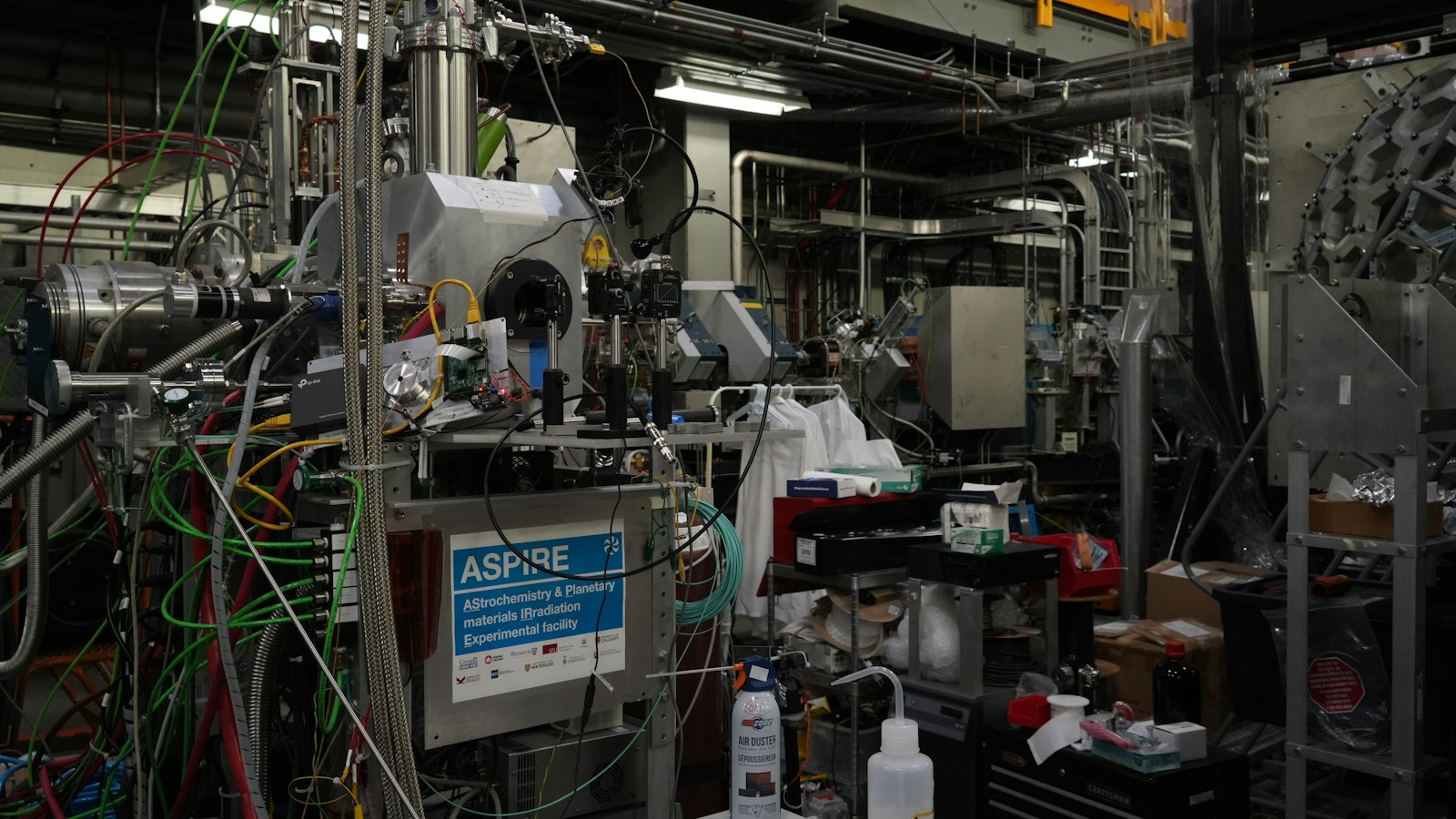
Physics research equipment (illustrative; not the National MagLab). Photo by Daniel Miksha on Unsplash, used under the Unsplash License.
Quick Answer: The National High Magnetic Field Laboratory generates about $174 million in annual economic output in the Tallahassee metro area and supports 1,266 local jobs, according to a January 2026 study by Florida State University’s Center for Economic Forecasting and Analysis. Statewide, every dollar Florida invests in the MagLab returns $6.15 in economic output.
What is the National MagLab’s economic impact on Tallahassee?
The National High Magnetic Field Laboratory, known as the National MagLab, is a high-field magnet research facility operated by Florida State University and headquartered in Tallahassee, with partner sites at the University of Florida and Los Alamos National Laboratory. A new economic impact analysis, prepared for the lab by FSU’s Center for Economic Forecasting and Analysis (CEFA) and dated January 2026, estimates the lab’s average annual effect on three economies: the Tallahassee metropolitan area, the state of Florida and the United States.
For the Tallahassee metro, the study estimates average annual economic output of $174,118,270, support for 1,266 jobs and $77,130,416 in labor income. At the state level, the figures rise to $231,689,303 in output, 1,652 jobs and $95,478,842 in income. Nationally, the lab’s spending supports $296,519,758 in output, 1,603 jobs and $124,278,139 in income.
| Geography | Annual Economic Output | Jobs Supported | Labor Income |
|---|---|---|---|
| Tallahassee metro area | $174.1 million | 1,266 | $77.1 million |
| State of Florida | $231.7 million | 1,652 | $95.5 million |
| United States | $296.5 million | 1,603 | $124.3 million |
Source: FSU Center for Economic Forecasting and Analysis, Economic Impact Analysis of the National High Magnetic Field Laboratory, Final Report, January 2026. Figures in 2026 dollars.
How was the MagLab study done?
The report was prepared by Julie Harrington, Ph.D., Cameron Valenti, Dominick Purpura, Michael Garcia and research intern Hayden Ferrera. The MagLab requested it in 2025, the 30th year of its scientific user program. CEFA used IMPLAN, an economic input-output model, with 2024 data, and expressed results in 2026 dollars. The analysis drew on MagLab finance and budget data going back to 1990, used 2019 through 2023 as its current study period, and projected impacts 20 years forward to 2044.
The authors flagged one caveat. The 2019-2023 study period overlapped the COVID-19 pandemic, which the report says likely dampened the measured impacts.
What is Florida’s return on its MagLab investment?
The report puts the state’s average annual investment in the MagLab at $37,704,933. Taken on its own, that spending supports 256 jobs and $15,472,535 in income. Compared with the lab’s total impact on Florida, the report calculates a benefit-to-cost ratio of 6.15 for output, 6.45 for jobs and 6.17 for income. In the report’s words, every dollar of state money invested in the MagLab generates $6.15.
| State Return Measure | State Investment Alone | Total MagLab Impact in Florida | Ratio |
|---|---|---|---|
| Economic output | $37.7 million | $231.7 million | 6.15 |
| Jobs | 256 | 1,652 | 6.45 |
| Labor income | $15.5 million | $95.5 million | 6.17 |
Source: CEFA, January 2026.
The ratio has been consistent across studies. CEFA’s 2014 analysis put the state return at $6.57 per dollar, and its 2019 analysis put it at $6.44. An earlier 2003 study estimated a return of $3.50 per dollar.
How many scientists use the MagLab?
The MagLab is a user facility. Scientists from around the world apply for time on its magnets, and the lab’s economic footprint comes partly from the steady stream of visitors that creates. In 2023, the lab served 1,826 research users from 338 universities, government laboratories and private companies, according to the report. Senior researchers made up 46% of users, students 37%, postdoctoral researchers 14% and technicians 2%.
Those users produced more than 400 publications and 158 talks, lectures and presentations in 2023. The MagLab’s website says more than 1,800 researchers use its facilities each year, mostly at no cost to them.
How much do MagLab visitors add to the economy?
The report estimates visitor spending separately. Visitors to the lab add about $5.9 million in annual output, 30 jobs and $1.5 million in income in the Tallahassee area. At the state level, visitor spending produces about $8.3 million in output, 39 jobs and $2.7 million in income. Nationally, the figures are $11.6 million, 47 jobs and $3.7 million.
How many people work at the MagLab?
The report says the MagLab employed 809 staff members in 2023. Senior personnel made up 29% of the workforce, graduate students 19%, technical staff 17%, other professionals 12%, undergraduates 12%, postdoctoral researchers 8% and administrative staff 2%.
That mix matters for Tallahassee. More than a third of the lab’s workforce is made up of students and postdoctoral researchers, which makes the MagLab a training pipeline for scientists and engineers as well as an employer. The report also estimates that MagLab researchers living in the Tallahassee area paid about $1.77 million in property taxes in 2024, a figure the authors derived using a third-party property tax calculator.
| MagLab Key Facts | Detail |
|---|---|
| Operator | Florida State University |
| Partner sites | University of Florida; Los Alamos National Laboratory |
| Tallahassee address | 1800 E. Paul Dirac Drive |
| Awarded to FSU | August 1990, after National Science Foundation peer review |
| Tallahassee complex dedicated | October 1, 1994 |
| Staff (2023) | 809 |
| Research users (2023) | 1,826 from 338 institutions |
| User facilities | Seven |
| Funding sources | National Science Foundation and State of Florida |
| Director | Kathleen M. Amm |
Sources: CEFA, January 2026; National MagLab; Wikipedia entry on the National High Magnetic Field Laboratory.
What makes the MagLab’s facilities unique?
The lab operates seven user facilities. Its DC Field Facility in Tallahassee provides steady magnetic fields of up to 45 tesla. The Pulsed Field Facility at Los Alamos reaches up to 100 tesla in short bursts. The High B/T Facility at the University of Florida combines fields up to 15 tesla with temperatures as low as 0.4 millikelvin, a fraction of a degree above absolute zero. Other facilities support nuclear magnetic resonance, electron magnetic resonance, magnetic resonance imaging and spectroscopy, and ion cyclotron resonance mass spectrometry.
The report highlights a world record continuous magnetic field of 45.5 tesla, produced by combining a compact high-temperature superconducting test coil with a resistive magnet. The lab’s 45-tesla hybrid magnet, which pairs resistive and superconducting magnets, and its 41.4-tesla resistive magnet are among its signature instruments. The Tallahassee complex covers about 370,000 square feet and runs on a 48-megawatt DC power supply. Its instruments also include a 900-megahertz nuclear magnetic resonance magnet used for chemistry and biology research. Equipment on that scale is one reason scientists travel to Tallahassee rather than doing the work at their home institutions.
In 2023, the DC Field Facility drew the largest share of users, about 35%, followed by nuclear magnetic resonance at about 19%, according to the report.
How did Tallahassee win the MagLab?
The lab traces to a national competition. An FSU-led consortium submitted its proposal in 1989, and the National Science Foundation awarded the lab to FSU in August 1990 after peer review, over a counterproposal from the Massachusetts Institute of Technology. The Tallahassee complex was dedicated on October 1, 1994, with then-Vice President Al Gore delivering the keynote.
Three decades later, the lab is a fixture of Tallahassee’s economy and its research identity. The report notes that 2025 marked the 30th year of the MagLab’s scientific user program.
How does the 2026 study compare with earlier MagLab studies?
CEFA and its predecessors have measured the lab’s impact several times. The new estimates are lower than those in the 2019 study, which projected average annual output of $221 million, income of $94 million and 2,176 jobs in the Tallahassee area. The 2026 study puts those figures at $174 million, $77 million and 1,266 jobs. The new figures are higher than the 2014 study’s Tallahassee estimates of $90 million in output, $34 million in income and 1,150 jobs.
| Study | Tallahassee Annual Output | Tallahassee Jobs | Tallahassee Income | Florida Return per $1 |
|---|---|---|---|---|
| 2014 (20-year projection) | $90 million | 1,150 | $34 million | $6.57 |
| 2019 (20-year projection) | $221 million | 2,176 | $94 million | $6.44 |
| 2026 (20-year projection to 2044) | $174 million | 1,266 | $77 million | $6.15 |
Source: CEFA, January 2026, literature review of prior MagLab economic impact studies.
Earlier work used different frameworks. A 2003 study by Lynch and Harrington estimated that from 2000 to 2005 the lab would generate more than $400 million in gross regional product, $315 million in wages, $96 million in taxes and 4,630 jobs over the period. A 2009 CEFA study covering 2006 to 2016 estimated more than $150 million in annual output, 1,414 jobs and $62.5 million in income.
The report attributes part of the drop from 2019 to the pandemic years in its 2019-2023 study period. Readers should also keep in mind that each study uses its own data period, model year and dollar basis, so the comparison is a guide to direction rather than a precise measure of change.
How does the MagLab connect to Tallahassee businesses?
The lab’s value to the local economy extends beyond its own payroll. Danfoss Turbocor Compressors, which makes oil-free, magnetic-bearing centrifugal compressors at its site in Tallahassee’s Innovation Park, has cited the region’s research base in its expansion decisions. When Danfoss broke ground on a 22,000-square-foot application development center in Tallahassee in December 2015, Turbocor President Ricardo Schneider said the lab signified further collaboration with FSU and its magnet laboratory, ACHR News reported.
In December 2017, then-Gov. Rick Scott announced a further Danfoss expansion in Innovation Park that was expected to add 120 full-time research and development jobs paying about 200% of Leon County’s average annual wage. The Tallahassee-Leon County Office of Economic Vitality listed the National High Magnetic Field Laboratory among the research partners behind the project and estimated its total economic impact at more than $129 million. Cooling Post reported the project as a $12 million, 44,000-square-foot facility.
What about education and outreach?
The MagLab also reaches the public. In 2023, it served more than 1,400 K-12 students, drew more than 11,700 visitors to its annual open house and logged 3.4 million website interactions, according to the report. Viewers watched about 26,000 hours of its YouTube content. Those programs feed the region’s science education pipeline.
Brian’s Take
When I look at an investment, I want to know what each dollar returns and whether that return holds up over time. By the state’s own consultant’s math, the MagLab has delivered between $6.15 and $6.57 in Florida economic output for every state dollar across three studies spanning more than a decade. That is a consistent result, and consistency is what I look for.
I also see a caution flag. Tallahassee jobs supported fell from 2,176 in the 2019 study to 1,266 in this one. The pandemic explains part of that, but the community should not assume the number bounces back on its own. Keeping the lab’s federal and state funding strong, and turning more of its research into local companies like the Danfoss operation, is where Tallahassee’s leaders should focus.
For a capital city economy that leans heavily on state government, a world-class research facility that serves 1,826 research users a year from 338 institutions is a rare diversifier. That is worth protecting.
Frequently Asked Questions
How much does the MagLab contribute to Tallahassee’s economy?
The January 2026 CEFA study estimates the MagLab generates about $174 million in annual economic output, 1,266 jobs and $77 million in labor income in the Tallahassee metro area.
What is Florida’s return on its MagLab investment?
The study estimates $6.15 in economic output for every dollar of state money invested, based on average annual state investment of about $37.7 million.
How many people work at the National MagLab?
The report says the MagLab employed 809 staff members in 2023.
Who operates the National MagLab?
Florida State University operates the lab, with partner facilities at the University of Florida and Los Alamos National Laboratory. It is funded by the National Science Foundation and the State of Florida.
How many researchers use the MagLab each year?
The lab served 1,826 research users from 338 institutions in 2023.
Sources and Further Reading
- Economic Impact Analysis of the National High Magnetic Field Laboratory, Final Report (January 2026), Florida State University Center for Economic Forecasting and Analysis
- Economic Impact Report, National High Magnetic Field Laboratory
- National High Magnetic Field Laboratory, Wikipedia
- Danfoss to Expand in Tallahassee, Tallahassee-Leon County Office of Economic Vitality
- Danfoss to expand Turbocor Compressor operations in Florida, ACHR News
- Danfoss breaks ground on new testing laboratory, ACHR News
- Danfoss to expand Turbocor facility, Cooling Post
About the Author